B1 GrammarB1 Intermediate
Modal verbs of deduction: Must, may, might, could, can’t
Modal verbs of deduction: Grammar chart
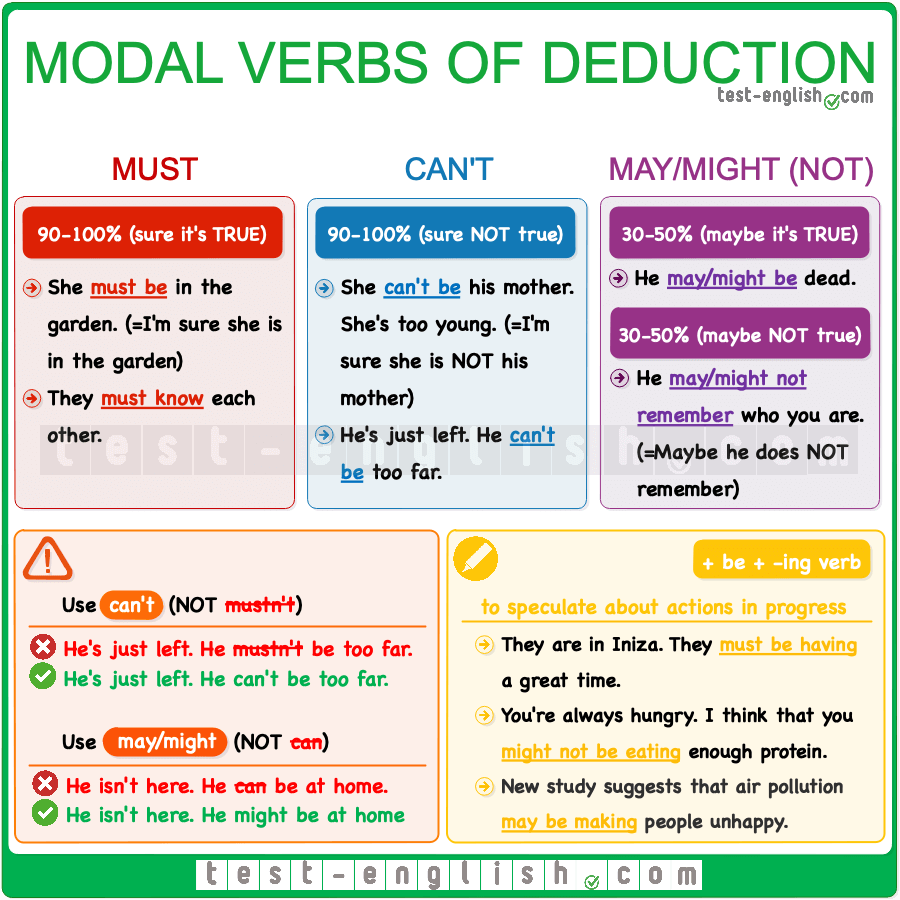
Download full-size image from Pinterest
May, might
We use may and might to talk about things that are possibly true, but we don’t know for sure.
- He’s more than 2 meters tall. He might be a basketball player. (=perhaps he is)
- He says Betty is his friend, but I think she may be his girlfriend.
We use may not or might not to talk about things that are possibly not true, but we don’t know for sure.
- You should call her. She might not know where you are. (=perhaps she doesn’t know)
Don’t use can for deduction
We don’t use can as a modal of deduction.
- He can be at home now.

- He might/may be at home now.

Must, can’t
We use must when we are sure, or quite sure, that something is true.
- You must be tired after the long journey. (=I’m sure you are tired)
- I’m sure I had the keys when I left. They must be in the car.
❗ But we use can’t (NOT mustn’t) when we are sure, or quite sure, that something is not true.
- We’ve been walking for hours. It mustn’t be far from here.
- We’ve been walking for hours. It can’t be far from here.
- They’ve lived here only for a couple of months. They can’t know many people.
+ be + -ing
After may, might, must or can’t, we can use be + -ing, when we are talking about actions in progress.
- They’ve gone to Ibiza, and right now, they must be having a great time.
- Call him. He might be waiting for us.
Ready to practice?
Put your knowledge to the test with interactive exercises (3 exercises available).
Download Lesson & Exercises as PDF
Get printable PDF worksheets for Modal verbs of deduction: Must, may, might, could, can’t including grammar explanations, exercises, and answer keys.
High-resolution grammar charts
Printable student worksheet
Complete answer keys & notes
Offline classroom ready