Would rather, would prefer: Expressing preference
Would rather, would prefer: Grammar chart
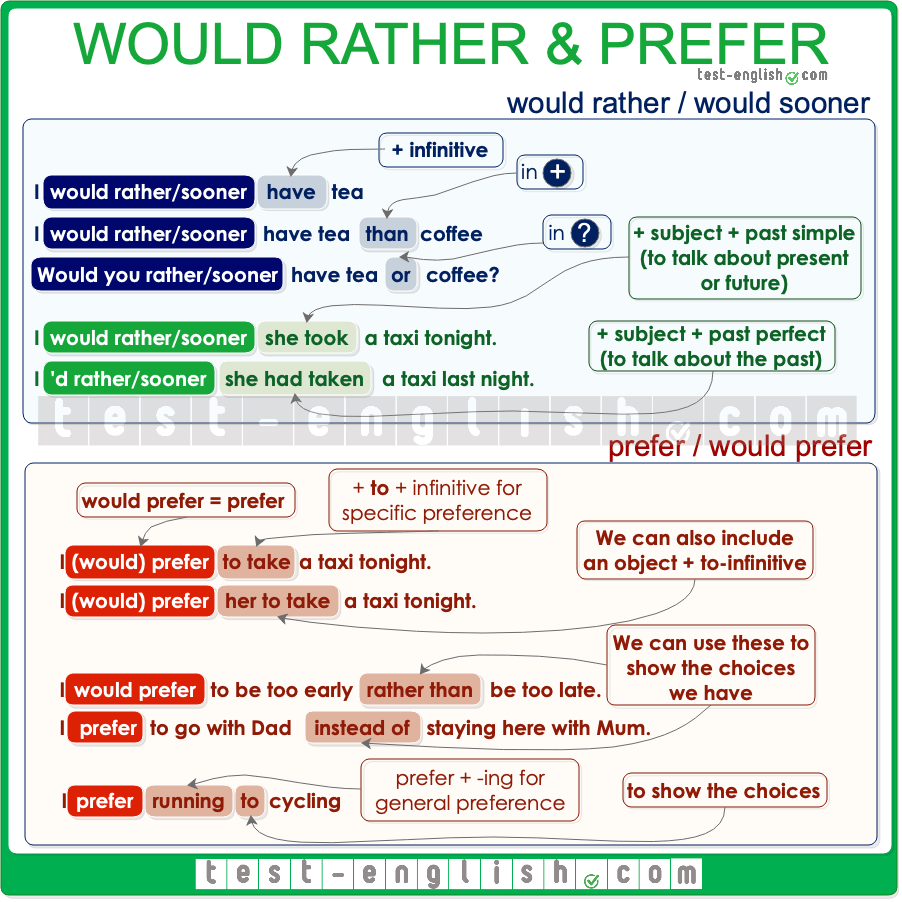
Download full-size image from Pinterest
Would rather/would sooner
Would rather/sooner + infinitive … (than)
We use would rather/sooner + infinitive (without to) to talk about preference. We can use it with than (+noun/infinitive) in affirmative sentences or with or in questions.
- I‘d rather/sooner have tea, please.
- I‘d rather/sooner have tea than drink that coffee.
- Would you rather/sooner have tea or coffee?
Would rather/sooner + subject + past simple
We can use would rather/sooner + subject + past simple to refer to the present or future.
- We‘d rather/sooner she was/were with us now.*
- She‘d rather/sooner I picked her up after lunch.
- Would you rather/sooner we went by bus or by train?
🔍 Note that we can use were instead of was with I/he/she after would rather + subject.
Prefer
(Would) prefer + to + infinitive … (rather than/instead of)
We use prefer/would prefer + noun or to + infinitive to talk about specific preference, i.e. what we prefer on a specific occasion.
- I would prefer to stay in a hotel near the airport. (or I would rather stay…)
- Most clients prefer to have breakfast in their bedroom.
We can use prefer/would prefer with rather than or instead of to show the choices we have.
- I would prefer to be too early rather than be too late.
- I prefer to go with Dad instead of staying here with Mum.
❗ Note that we use rather than + infinitive without to
Prefer + -ing verb
We use prefer + noun or -ing verb to talk about general preference, i.e. what we prefer in general, on every occasion.
- I love running, but he prefers cycling.
We can use prefer with to to show the choices we have. The word to is a preposition here, so if we use a verb after to, it should take the -ing form.
- He prefers walking to cycling.
Ready to practice?
Put your knowledge to the test with interactive exercises (3 exercises available).
Download Lesson & Exercises as PDF
Get printable PDF worksheets for Would rather, would prefer: Expressing preference including grammar explanations, exercises, and answer keys.