A1 GrammarA1 Elementary
Adjectives: Old, interesting, expensive, etc.
Adjectives in English – grammar chart
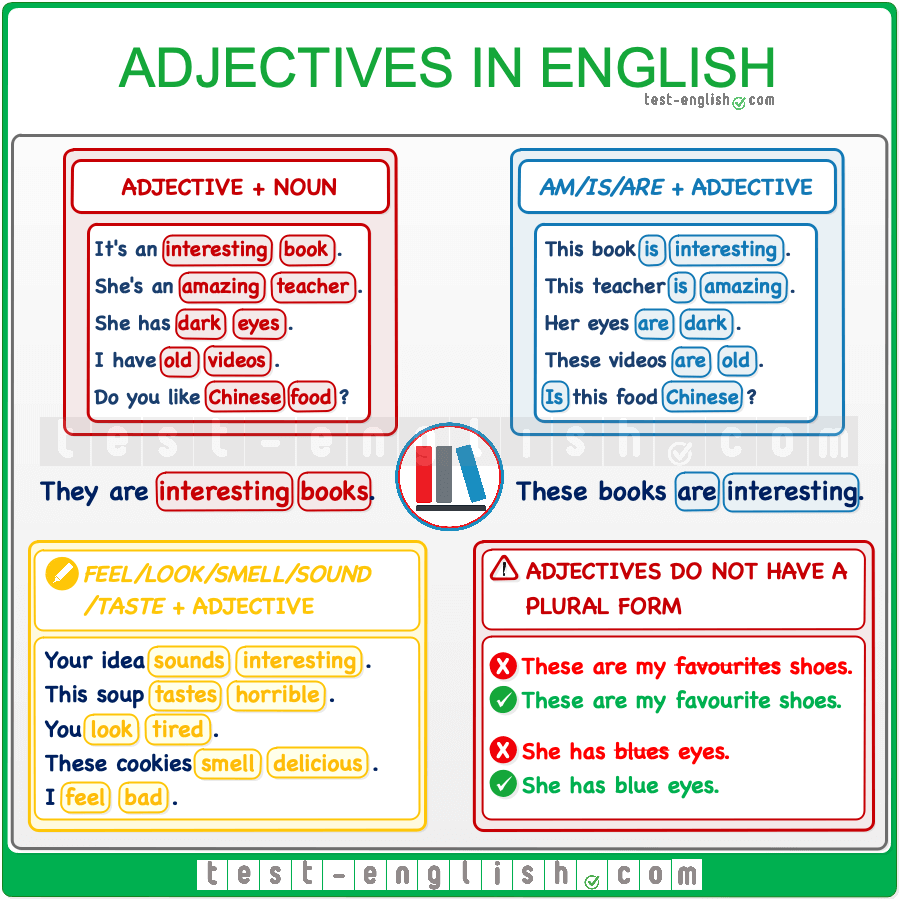
Download full-size image from Pinterest
Adjective + noun
When we use adjectives with a noun in English, the adjectives go before the noun.
- It’s an expensive guitar.

- It’s a guitar expensive.

- She has a new car.
- She has a car new.
Am/is/are + adjective
We can also use adjectives without a noun after the verb be.
- This guitar is expensive.
- Her car is new.
In questions, the adjective can go after be + subject.
- Is your car new?
- Are your classmates nice?
Feel/look/smell/sound/taste + adjective
We can also use adjectives without a noun after the verbs of the senses: feel, look, smell, sound, taste.
- Your idea sounds interesting.
- I don’t like this soup. It tastes horrible.
- You look tired.
- These cookies smell delicious.
- I feel depressed.
No plural
Adjectives in English have no plural. They are always singular.
- These are my favourite shoes.
- These are my favourites shoes.
- She has blue eyes.
- She has blues eyes.
Very/quite
We can use very and quite before the adjectives.
- It’s very expensive.
- It’s quite expensive.
Ready to practice?
Put your knowledge to the test with interactive exercises (3 exercises available).
Download Lesson & Exercises as PDF
Get printable PDF worksheets for Adjectives: Old, interesting, expensive, etc. including grammar explanations, exercises, and answer keys.
High-resolution grammar charts
Printable student worksheet
Complete answer keys & notes
Offline classroom ready